Dr. Lais Costa’s research and program strengthens preparedness, readiness and recovery for disasters and emergencies involving animals. Every disaster impacts humans and animals. By including animals in disaster planning, it protects the health and safety of all involved. By ensuring rural communities take an all-animals-all-hazards approach to preparedness, we build resilience together.
Meet the Team
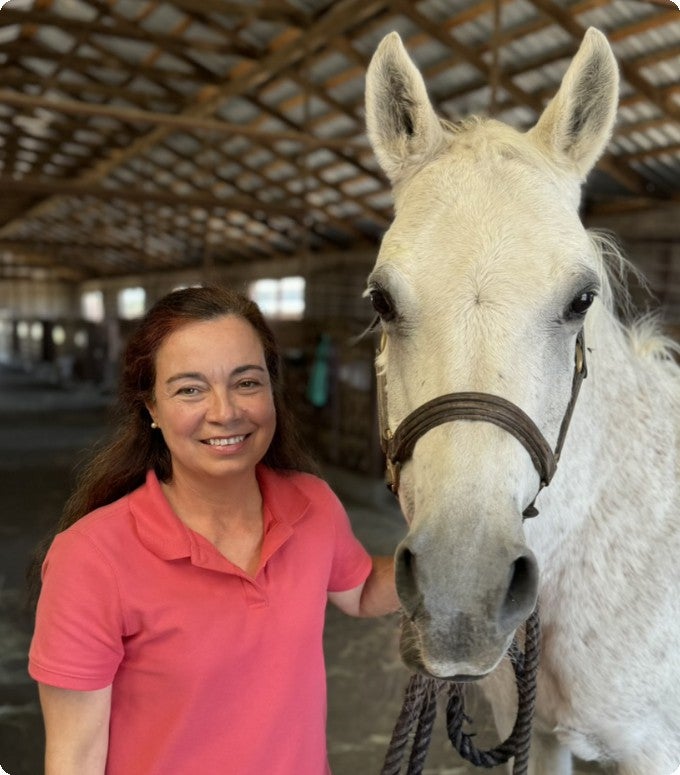
Dr. Lais Costa, Assistant Professor in Veterinary Medicine Extension and Specialist in Rural Community Disaster Preparedness, Department of Population Health and Reproduction, UC Davis Weill School of Veterinary Medicine.
Dr. Costa is a Diplomate of the American College of Veterinary Internal Medicine (ACVIM) in large animal internal medicine and a Diplomate of the American Board of Veterinary Practitioners (ABVP) in equine specialty. She received her veterinary degree from São Paulo State University, UNESP-Botucatu, Brazil. She completed her ECFVG in 1998. She holds a Master of Science Degree in veterinary infectious diseases from the Maxwell Gluck Equine Research Center, University of Kentucky-Lexington, and a PhD in Respiratory Pathobiology from Louisiana State University-Baton Rouge. Since attaining her diplomate status, she has worked as a large animal internal medicine clinical educator and researcher at veterinary schools and medical teaching hospitals including Louisiana State University, University of Georgia, Tufts University, Mississippi State University and University of California – Davis. She has also worked in private practice. She is a Class II Federally Accredited veterinarian.
Dr. Costa has responded to several extreme weather events. She was part of the Louisiana State University veterinary emergency response, equine branch, during Hurricanes Katrina and Rita. She served as director of operations for the UC Davis Veterinary Emergency Response Team, one of the Veterinary Medical Reserve Corps in California, for 5 years leading the UC Davis team to responses to the 2018 Camp fire, 2019 Kincade fire, 2020 LNU Lightening Complex and North Complex fires, 2021 Dixie and Caldor fires, and 2022 Mosquito fire.
Dr. Costa champions the integration of veterinary professionals in equine rescues. She is certified in Large Animal Technical Rescue and teaches equine emergency medical care in rescues and airlifts. She leads the UC Davis Equine Medical Strike Team; the team brings equine emergency medical skillsets to equine rescue and airlift rescue trainings integrating with large animal rescue groups in Northern California. The team also provides equine medical rescue and airlift expertise at the annual Western States Endurance Ride, the Tevis Cup.
Dr. Costa is dedicated to the health and welfare of equids. She worked with equids in rural areas in Brazil, including the Pantaneiro horses in the Wetlands of Mato Grosso and Campaneiro horses of Roraima. She provides volunteer veterinary care to working equids as part of the Equitarian Initiative. In 2021, she became the Director of the International Animal Welfare Training Institute at UC Davis focusing on health and welfare issues of animals, especially equids in rural areas. In the same year, she became the director of the Donkey Welfare Symposium Committee that organizes and hosts the annual symposium, a global venue for annual discussions of donkeys and the issues they face in the modern world. Dr. Costa has served several roles in the American Association of Equine Practitioners and The Foundation for the Horse. She was part of the Equine Abuse and Neglect Committee and the Welfare and Public Policy Advisory Council. She currently serves in the Infectious Diseases Committee, the Disaster Medicine Working Group, and the Wild Horse and Burro Position Statement Working Group.
She collaborated in developing the guidelines for large animal triage and care in the field, at animal rescues and in emergency shelters. These best practices guidelines are published by the National Alliance of State and Agriculture Animal Emergency Program.
With experiences as responder and coordinator of veterinary emergency response, her preparedness program aims to build local capacity and bolster resilience in California rural communities. Dr. Costa’s applied research projects include development of emergency contingency planning for rural animal holding facilities, preparedness outreach and education in under-resourced communities, planning and readiness training of veterinary professionals and animal care staff, and biosecurity training.
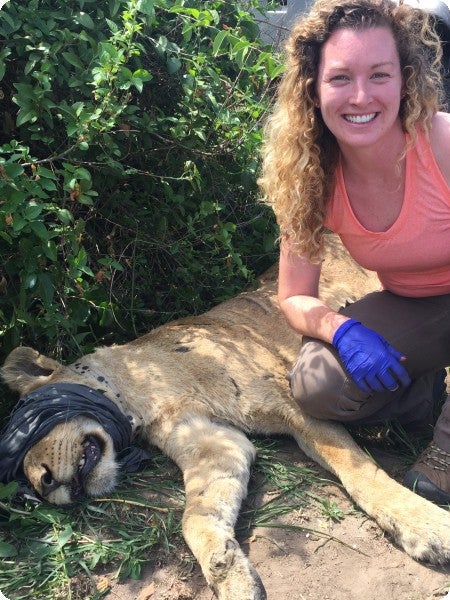
Dr. Hayley Dieckmann
Program manager for All Hazard Preparedness for Captive Wildlife
Dr. Hayley Dieckmann is a veterinarian dedicated to the field of animal disaster preparedness and response. She has a special passion for and focus on the diverse taxa of species housed in zoos and captive wildlife facilities. Dr. Dieckmann attended the University of California, Davis School of Veterinary Medicine, where she was highly involved in veterinary emergency response, leadership and research. Her experiences responding and organizing veterinary supplies and personnel for the Camp and Kincade Fires of Northern California in 2018 and 2019 fueled her desire to contribute to the field. Her publications in disaster response focus on improving coordinated animal care during natural and human-caused disasters.
Currently, she functions as the project manager for a collaborative initiative between UC Davis Veterinary Medicine Extension and the USDA Animal Care. In this role, Dr. Dieckmann leads the development and implementation of comprehensive emergency and disaster response plans for zoological and wildlife facilities. Her work focuses on strengthening contingency planning through risk and vulnerability assessment and orchestrating tabletop and functional exercises to optimize animal and human safety in high-risk environments. In addition to her work in emergency preparedness, Dr. Dieckmann serves as an associate veterinarian at the Oakland Zoo and at the Bishop Ranch Veterinary Center, where she provides advanced medical and surgical care for a wide array of species.

Dr. Tanner Talan
Staff for All Hazard Preparedness
for Captive Wildlife
Dr. Tanner Talan is a veterinarian in emergency and critical care with a special interest in disaster response and emergency planning. Tanner received his undergraduate degree in organismal biology from CSU Chico and then received his veterinary degree from the University of California, Davis in 2023. While at UC Davis, Tanner was heavily involved in the Student Veterinary Emergency Response Team (SVERT) and worked as the webmaster for the Veterinary Emergency Response Team (VERT). Since 2018, Tanner has deployed to the Camp, LNU Complex, North Complex, Dixie, Caldor, and Park Fires performing tasks ranging from shelter medicine, supply and team coordination, and animal search and rescue. Since graduating, Tanner did his internship in San Diego to diversify and refine his clinical skills and has been working as an emergency veterinarian for dogs and cats in Sacramento since 2024. Outside of the clinical space, Tanner performed research and surveillance for elephant herpesvirus (EEHV) in Thailand, Nepal, and with the UCD One Health Institute and the Houston Zoo.

Trevor Skaggs
Staff for All Hazard Preparedness
for Captive Wildlife
Trevor Skaggs is a disaster response professional and software engineer with over 15 years of experience supporting large-scale emergency operations across the western United States and Hawaii. His work focuses on animal disaster preparedness, technical rescue, and the design of operational systems that help organizations plan for, respond to, and recover from complex incidents involving animals. Trevor specializes in bridging field operations and technology, developing practical tools and workflows that improve coordination, accountability, and decision-making during high-consequence events.
He founded Shelterly in 2019 to support end-to-end tracking and coordination of animals during disasters, with a particular emphasis on zoos, shelters, and animal response organizations operating under emergency conditions. Shelterly has been used to support preparedness planning, training, and live incident response, including evacuations, reunification, veterinary care, and interagency coordination. Trevor has supported disaster preparedness and response efforts across California and Hawaii, including serving as Animal Search Manager during the Lahaina Fire on Maui and supporting animal response operations during the Palisades and Eaton Fires. His work emphasizes scalable preparedness, operational resilience, and integrating animal welfare considerations into broader emergency management frameworks.